
Overview
Crime, Policing, and Public Safety
Overview
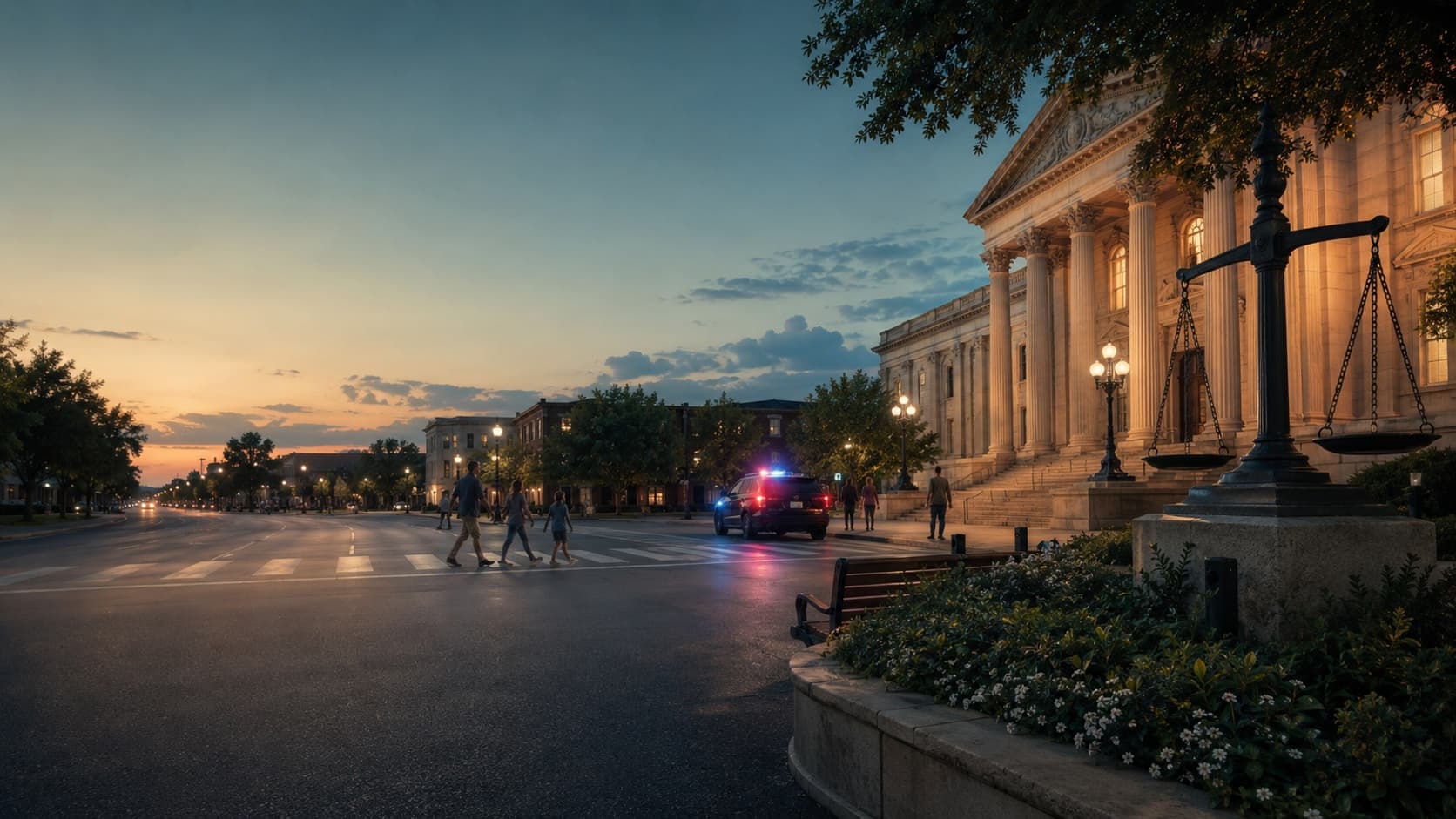
Crime, policing, and public safety are core responsibilities of government because they involve protection of life, property, liberty, and public order. A society cannot function well if people are afraid to walk in their neighborhoods, open a business, use public spaces, or trust that laws will be enforced fairly. At the same time, public safety policy must respect constitutional rights, due process, and limits on government power.
This topic includes more than police departments. It also includes prosecutors, courts, jails, prisons, probation, parole, victim services, mental health systems, neighborhood organizations, schools, housing conditions, drug policy, firearms policy, and local government management. A crime problem may appear on the street, but the causes and solutions often involve several institutions.
People search for this topic because public safety is immediate and practical. A rise in car thefts, shoplifting, shootings, assaults, or disorder can change how people live. Parents may worry about schools and parks. Business owners may worry about theft or vandalism. Residents may want faster emergency response. Others may worry about excessive force, wrongful arrests, unequal treatment, or a justice system that punishes without solving underlying problems.
A serious discussion has to keep two principles in view at the same time: people have a right to be safe from crime, and people also have a right to be safe from arbitrary or abusive government power. Public safety depends on both order and lawful restraint.
What Public Safety Policy Includes
Policing is the most visible part of public safety. Police respond to emergencies, investigate crimes, patrol neighborhoods, enforce traffic laws, make arrests, gather evidence, and help manage public disorder. Their role can vary by community. In some places, police spend much of their time responding to violent crime. In others, they handle mental health calls, homelessness-related issues, domestic disputes, traffic crashes, drug activity, or quality-of-life complaints.
Prosecution involves deciding whether to bring criminal charges, what charges to file, whether to offer plea agreements, and how to prioritize limited resources. Prosecutors have broad discretion, which makes their judgment important. A prosecutor may focus on violent crime, repeat offenders, public corruption, drug trafficking, retail theft, domestic violence, or alternatives to incarceration for lower-level offenses.
Sentencing determines what happens after conviction. Sentences may include jail, prison, probation, fines, restitution, treatment, community service, electronic monitoring, or diversion programs. Sentencing policy reflects a community’s view of punishment, deterrence, rehabilitation, incapacitation, and fairness.
Corrections includes jails, prisons, probation, parole, and reentry programs. Jails usually hold people awaiting trial or serving shorter sentences. Prisons usually hold people convicted of more serious crimes. Probation and parole allow some people to live in the community under supervision. Corrections policy affects public safety, taxpayer costs, prison conditions, family stability, and whether people released from custody are likely to reoffend.
Community safety includes the everyday conditions that make neighborhoods feel secure: lighting, safe parks, stable housing, functioning schools, local businesses, public transportation, neighborhood trust, and the presence of responsible adults and institutions. Community safety also includes victim support, witness protection, youth programs, and cooperation between residents and law enforcement.
Crime prevention tries to reduce crime before it happens. Prevention can include visible patrols, focused deterrence for repeat offenders, school-based interventions, addiction treatment, mental health services, environmental design, street lighting, job training, mentoring, domestic violence prevention, and efforts to reduce illegal gun carrying. Prevention can be enforcement-focused, social-service-focused, or both.
How Ideologies Approach It
Conservatism usually emphasizes law and order, accountability, deterrence, support for police, protection of victims, and consistent enforcement. Conservatives often argue that public safety declines when laws are not enforced, sentences are too lenient, or police are discouraged from proactive work. They tend to support stronger penalties for violent and repeat offenders, more police resources, and policies that prioritize order in public spaces. Many conservatives also emphasize family stability, local institutions, and civic discipline as foundations of safer communities.
Liberalism often supports a balanced approach that combines enforcement with reform. Liberals usually accept the need for policing, prosecution, and incarceration in serious cases, but they may also focus on fairness, evidence-based sentencing, police accountability, treatment programs, and alternatives for lower-level offenses. Liberal approaches often emphasize professional standards, community policing, civil rights enforcement, and investments in prevention.
Progressivism tends to frame crime and policing through inequality, structural conditions, and state power. Progressives are more likely to focus on poverty, housing instability, trauma, addiction, mental health, school discipline, racial disparities, and over-incarceration. They may support reducing reliance on police for nonviolent social problems, limiting pretrial detention, expanding diversion, strengthening public defense, and increasing oversight of law enforcement. Progressives often argue that safety should be measured not only by arrests, but by whether communities are stable, healthy, and trusted.
Libertarianism emphasizes individual rights, due process, limited government, property rights, and skepticism toward state coercion. Libertarians often support firm protection against violence and theft, but they are cautious about broad police powers, surveillance, asset forfeiture, drug criminalization, and excessive sentencing. They may favor criminal justice reforms that reduce victimless-crime enforcement, protect privacy, limit qualified immunity, and ensure that government must meet high standards before taking life, liberty, or property.
Populism can appear on both the right and left. Right Populism often emphasizes public disorder, illegal drugs, border-related crime concerns, support for rank-and-file police, and frustration with officials seen as soft on crime. Left Populism may emphasize corporate crime, corruption, police misconduct, prison conditions, and unequal justice for wealthy and poor defendants. Populists usually focus on whether the system protects ordinary people or powerful insiders.
Comparison Table
| Ideological tradition | Police role | Punishment versus rehabilitation | Sentencing severity | Civil liberties concerns | Community safety priorities | Reform orientation |
|---|---|---|---|---|---|---|
| Conservatism | Strong, visible law enforcement with support for officer authority | Punishment and deterrence emphasized, especially for violent and repeat crime | Generally favors tougher penalties for serious offenses | Concerned about rights, but usually prioritizes order and victim protection | Safe streets, property protection, public order, victim rights | Reform focused on effectiveness, recruitment, discipline, and enforcement capacity |
| Liberalism | Professional policing with accountability and community trust | Mix of accountability, rehabilitation, and prevention | Supports proportional sentencing and alternatives for lower-level cases | Strong concern for equal treatment, due process, and misconduct oversight | Balanced focus on crime reduction, fairness, and services | Reform through training, standards, data, oversight, and prevention |
| Progressivism | Narrower police role, especially for social-service or mental-health issues | Rehabilitation, diversion, and root-cause prevention emphasized | Often favors reducing incarceration for nonviolent offenses | High concern about state power, disparities, and over-policing | Housing, health care, youth support, violence interruption, trust | Structural reform, decarceration, oversight, and alternatives to police response |
| Libertarianism | Limited role focused on force, fraud, theft, and rights protection | Punishment for rights violations; skepticism toward victimless-crime punishment | Opposes excessive sentences and broad criminal codes | Very high concern about surveillance, searches, forfeiture, and due process | Protection of persons and property with limited state power | Reform focused on limiting coercion and protecting constitutional rights |
| Populism | Strong when police are seen as defending ordinary people; skeptical when seen as serving elites | Varies; often punitive toward crimes that harm working communities | Often favors severity for visible disorder, violence, or elite corruption | Concern depends on whether institutions are trusted | Protection from disorder, drugs, corruption, and institutional neglect | Anti-establishment reform, local control, victim-centered or anti-corruption measures |
Current Policy Context
Debates about violent crime often receive the most public attention because the stakes are highest. Homicide, robbery, assault, domestic violence, and gun crime can change how people use streets, schools, parks, businesses, and public transportation. National trends matter, but crime is experienced locally. One city may see improvement while another faces serious problems. Even within one city, conditions can differ sharply by neighborhood.
Property crime is also politically important. Burglary, auto theft, shoplifting, package theft, vandalism, and fraud may not always receive the same attention as violent crime, but they affect daily life and local confidence. A small business repeatedly hit by theft may raise prices, reduce hours, hire security, or close. A neighborhood with frequent car break-ins may lose trust in local government even if violent crime is low.
Bail policy is a recurring debate because it sits between public safety and due process. Supporters of bail reform argue that people who have not been convicted should not remain in jail simply because they are poor. Critics argue that some reforms release people who pose risks to victims, witnesses, or the public. The central question is how to distinguish low-risk defendants from those who are likely to flee, intimidate witnesses, or commit serious new crimes before trial.
The phrase defunding the police became a major political flashpoint, but the underlying debate is broader. Some activists argued for shifting money away from police departments and toward housing, mental health, youth services, or violence prevention. Others argued that reducing police budgets would weaken response times, investigations, recruitment, and deterrence. Many local governments now frame the issue as police reform, staffing, training, accountability, and appropriate use of non-police responders.
Gun violence is one of the most difficult public safety issues because it combines crime policy, constitutional rights, mental health, illegal markets, community conditions, and law enforcement capacity. Some policy approaches focus on gun restrictions, background checks, and limits on certain weapons. Others focus on illegal possession, repeat violent offenders, school security, mental health treatment, or the right of lawful self-defense. The debate is intense because it involves both public safety and individual liberty.
Local accountability matters because policing and prosecution are mostly local functions. Mayors, city councils, sheriffs, police chiefs, district attorneys, judges, and county officials all influence public safety. Voters may hold them responsible for crime trends, jail conditions, police conduct, court delays, or prosecutorial priorities. Local control allows communities to choose different approaches, but it can also create uneven standards.
Federal involvement usually appears in areas such as civil rights enforcement, federal criminal law, grants to local police, gun trafficking, drug trafficking, organized crime, terrorism, immigration-related enforcement, and prison oversight. The federal government can provide resources and national standards, but most day-to-day public safety decisions remain state and local.
Tradeoffs and Tensions
The first major tension is security versus liberty. Strong enforcement can deter crime and reassure the public. But broad government power can also threaten privacy, due process, property rights, free movement, and equal treatment. Constitutional limits are not obstacles to safety; they are part of a lawful safety system.
The second tension is enforcement versus prevention. Enforcement responds to wrongdoing and incapacitates dangerous offenders. Prevention tries to reduce the conditions that produce crime. A city that focuses only on prevention may fail to protect people from immediate threats. A city that focuses only on enforcement may fill jails without reducing the next generation of crime.
The third tension is punishment versus reintegration. Punishment can express moral accountability, protect victims, and deter future crimes. Reintegration recognizes that most incarcerated people eventually return to society. If they leave prison without housing, work, treatment, family stability, or supervision, public safety may suffer. The challenge is to punish serious wrongdoing while making lawful life possible afterward.
The fourth tension is uniform justice versus local discretion. Clear rules help prevent unequal treatment. But discretion allows police, prosecutors, and judges to consider facts that rigid rules may miss. Too much discretion can create inconsistency or bias. Too little discretion can produce harsh or irrational outcomes.
The fifth tension is public confidence versus institutional accountability. Police and courts need public trust to function. Witnesses must come forward, victims must report crimes, jurors must serve, and residents must believe the system is legitimate. But trust is weakened when institutions appear ineffective, abusive, politically selective, or unresponsive to victims.
Related Topics
Crime and public safety connect directly to courts, incarceration, constitutional rights, neighborhoods, poverty, education, drug policy, mental health, housing, firearms, local government, and civil liberties. A debate about police staffing may also be a debate about city budgets. A debate about jail populations may also be a debate about bail, addiction, trial delays, or mental health treatment.
Public safety also affects economic life. Businesses depend on predictable order. Workers need safe commutes. Families need secure homes and schools. Neighborhoods with chronic violence or disorder often struggle to attract investment, retain residents, and maintain public trust.
At the same time, criminal justice policy must remain bounded by law. Searches, arrests, prosecutions, plea bargains, trials, sentences, and confinement all involve government power over individuals. A free society needs that power to be strong enough to protect the innocent and restrained enough to avoid becoming arbitrary.
Public safety remains a core political issue because it is one of government’s most basic duties. People want safe communities, fair enforcement, accountable institutions, and respect for constitutional rights. The continuing debate is how to protect order and liberty at the same time, especially when local conditions, public expectations, and institutional capacity vary so widely.